
Almost 50 years after the break-in, America remains enthralled with the Watergate scandal. We have ingrained its name across our politics (“bridgegate”), our sports (“deflategate”), and our pop culture (“nipplegate”), in hopes of recapturing mere remnants of the drama and intrigue that captivated the nation for more than two years. As a result, it has become so saturated and trivialized over the years, we often fail to reflect on what actually happened on June 17, 1972, at the Watergate complex.
Almost every character seems to fit the Watergate drama perfectly: Nixon as the arrogant, bombastic villain, Woodward and Bernstein as the scrappy truth seekers, Hunt and Liddy as the conniving scoundrels, Ehrlichman and Haldeman as the immovable gatekeepers, and Dean as the reluctant participant turned noble savior.
One character that time and again gets left out is Frank Wills – let’s call him the unsung hero. His role in Watergate is directly tied to its outcome, yet he never receives the recognition he deserves. Lacking the professional status or the power structure – like a presidential administration or a major American newspaper – to back him, Wills stands out as a uniquely courageous figure in the Watergate saga.
Frank Wills was a contracted security guard working the graveyard shift when he uncovered the Watergate scandal…
Frank Wills grew up in poverty and turmoil. Born in Savannah, GA, his parents struggled to support the family, and eventually separated when he was a child. As a teenager, Frank dropped out of high school and decided to support himself in Detroit, working at a Chrysler factory. Unfortunately for him, Detroit manufacturing suffered during the 1968 recession, and he was on the move again, this time to Washington D.C., where he was encouraged by a coworker to transfer for work. He eventually landed a job as a security officer at the Watergate complex.
Working the midnight shift in security is a monotonous job. For Frank, that meant going up and down the 11 floors of the Watergate Office Building periodically throughout the night, ensuring doors were secured and nothing was out of the ordinary.
At the start of his shift, just after midnight on June 17, 1972, Frank passed the basement stairwell door on his way to a shift break across the street. He noticed tape masking the lock on the door, and initially didn’t think anything of it. As he explained, maintenance technicians often work late hours and will obstruct door locks as they are going in and out of the building between tasks. So, he removed the tape and went on his break. Attributing it to a sixth sense, Frank immediately continued another inspection round of the complex when he returned to work – guards would usually wait an hour or more between inspections. But Frank had an intuition, and that led him to the same door with another piece of tape obstructing the lock. From there, at 1:47am, Frank called it in to the 2nd precinct of the Metropolitan Police Department.
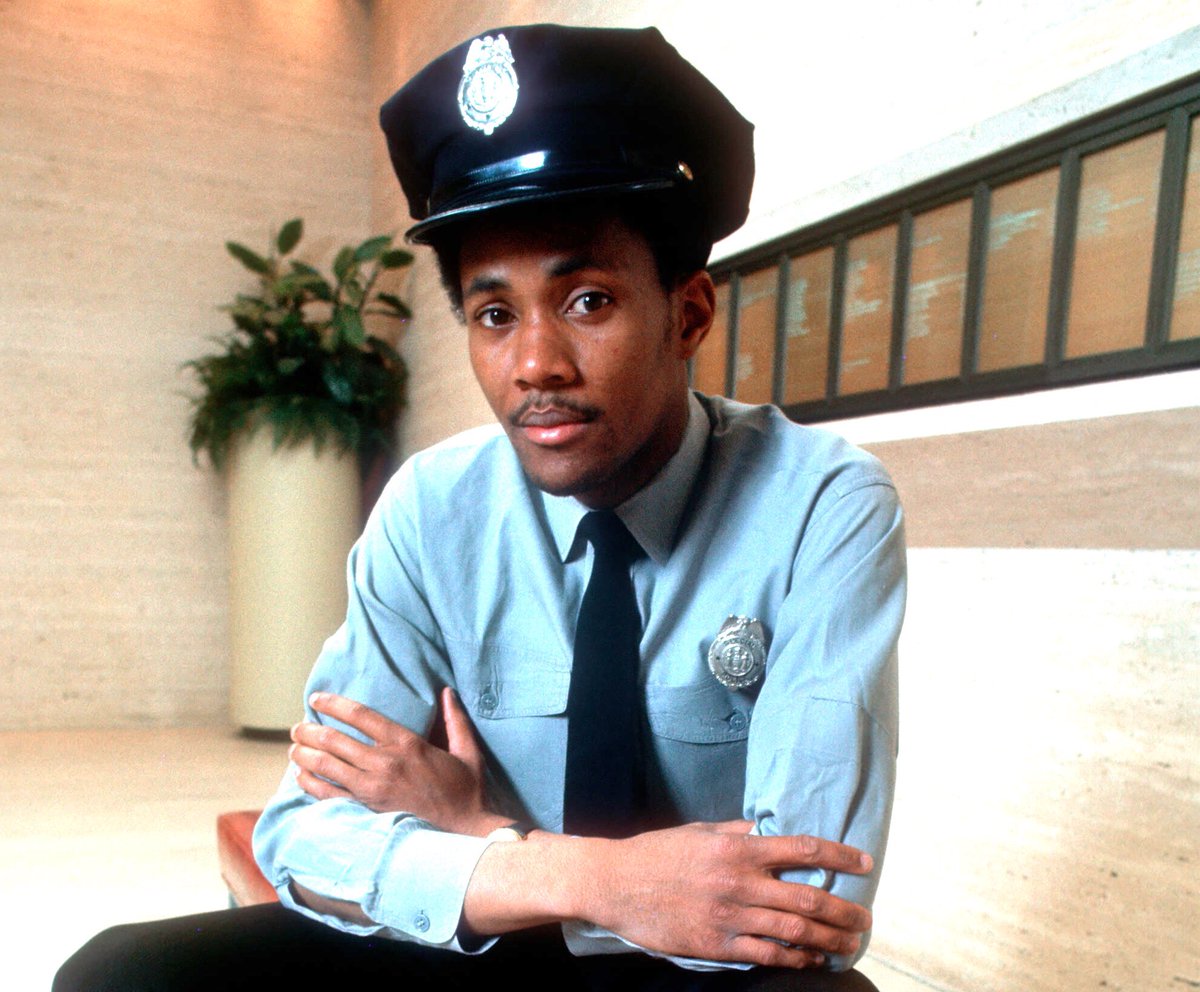
What Frank and the police found would change American politics and society forever. On the 6th floor of the Watergate Office Building, five men dressed in suits, surgical gloves, bugging equipment, and $2,300 cash, were ransacking the offices of the Democratic National Committee (DNC).
Based on a whim, an unknown 24-year-old security guard discovered the most infamous political scandal in American history. Even more important, the motions set by Frank Wills would lead to the gradual uncovering of perhaps the most complex, coordinated, and corrupt political operation in our nation’s history.
Watergate changed the face of American politics and democracy…
Watergate emerged at the heels of likely the most tumultuous decade in American history. The Vietnam War, urban unrest, race riots, and rapid social change in the 1960’s brought the country to a boiling point and by the end of the summer of 1968, Richard Nixon was coasting to a Republican nomination as the Democrats were tearing each other apart during a horrific week in Chicago. In the face of widespread social unrest, Nixon positioned himself as the law and order candidate and declared in his Republican nomination speech, “a new policy for peace and progress and justice at home.” The Watergate scandal some four years later was the ultimate betrayal of that promise.
Watergate was planned, funded, and executed by the Committee For The Re-Election of the President (CRP). Gordon Liddy, General Counsel for the CRP, was charged with overseeing “campaign intelligence”, which really meant spearheading the campaign’s illegal operations. These operations constituted most of the political espionage and sabotage that Nixon’s team conducted, and was funded by a slush fund that was overseen by managers of Nixon’s campaign, namely John N. Mitchell, former Attorney General and Chairman of the CRP under the Watergate scandal. As the mastermind of the Watergate plan, Liddy gained approval from John N. Mitchell and the rest of the CRP leadership to recruit a team to break into the headquarters of the DNC, record key documents and wiretap the offices for future use.
The saying “It’s not the crime, it’s the cover-up” originated from the Watergate scandal because up until the efforts to cover-up Watergate were undertaken, President Nixon and many of his top aides were arguably dissociated from the scheme. However, the convicted conspirators of the break-in soon became restless in the face of harsh sentences. To keep them from cracking under the pressure, the White House orchestrated a system of hush money payments and witness tampering to obstruct the investigation into Watergate. The first round of payments, fund-raised by Nixon’s personal attorney, Herbert Kalmbach, totaled about $220,000 in cash, but that did not come close to the demands of the seven Watergate conspirators to cover legal expenses, salary, and family upkeep. The White House became directly implicated in the Watergate cover-up when Nixon’s Chief of Staff, H.R. Haldeman, approved the use of $350,000 from a White House slush fund to keep the Watergate conspirators silent.
Throughout the cover-up, John Dean became increasingly uneasy. He described the illegal payments and promises of clemency as a “cancer” to the White House – a never ending cycle of illegal activities that would bury the White House and President Nixon deeper and deeper into scandal. As the financial demands neared $1 million, Dean appealed directly to Nixon, urging him to put a stop to these payments, fire top White House aides, and claim ignorance to protect the Presidency. According to the conversation, Nixon expressed encouragement for meeting the $1 million demand, proclaiming, “What I mean is you could get a million dollars. And you could get it in cash. I know where it could be gotten.” Throughout this crucial conversation between Dean and Nixon in 1973, the President not only revealed the extent to which he knew of and participated in the Watergate cover-up, but he in fact bragged about his ability to perpetuate its happenings.
The scandal came crashing down when one of the Watergate conspirators, James McCord, wrote a letter to the Judge overseeing his case, outlining how top White House aides had applied political pressure and supplied cash payments to entice the defendants to plead guilty, remain silent, and commit perjury. The ongoing Senate investigation into Watergate was getting closer and closer to connecting the White House to the planning and cover-up of the scandal. Facing no other options, Nixon fired his top aides, H.R. Haldeman and John Ehrlichman. Later, he called on the Attorney General and the Deputy Attorney General to fire the Special Prosecutor investigating Watergate. Their refusals to do so led to what came to be called the “Saturday Night Massacre” on October 20, 1973, in which both the Attorney General and Assistant Attorney General resigned, the Special Prosecutor was fired, and the public blow back led to impeachment charges against Nixon ten days later.
John Dean resigned from his position as Counsel to the President when he started reading the writing on the wall, and cooperated with investigators. His televised testimony to the Senate Watergate Committee revealed to the American people what Nixon knew and the central role he played in the Watergate cover-up. In case the confessions and utter demolition of the Nixon loyalists wasn’t enough, it was discovered that Nixon contained tapes of every conversation he had in the Oval Office. Those records were subpoenaed and presented even more damning information against the President. Facing certain impeachment, Richard Nixon became the first President in U.S. history to resign, on August 8, 1974.

Public and political demands at the outset of the Watergate scandal focused on reforming government accountability and ethics. Several federal laws were enacted to restore public trust in the government, including the Federal Elections Campaign Act (1974), which requires all election committees to report contributions and expenses; the Freedom of Information Act (FOIA, 1974), requiring the full or partial disclosure of government information upon request; the Presidential Records Act (1978), which transfers ownership of official presidential records from private to public; and the Federal Intelligence Surveillance Act (FISA, 1978), a crackdown on unchecked government surveillance in response to Nixon’s abuse of power through wiretaps and spying on political opponents.
Despite these efforts, faith in some of our largest institutions – government, media, business, etc. – was fractured beyond repair. At the height of the public outcry over the country’s involvement in Vietnam and decades of government lies regarding the country’s role in intensifying the conflict, Watergate caused irrevocable damage to public trust in government that has persisted even today.
Conclusion…
A month after the resignation, newly appointed President Gerald Ford pardoned Nixon of his crimes in an attempt to heal the country after years of bitter division, though this move likely cost Ford re-election in 1976. Besides the occasional speaking event and several published works, Nixon led a quiet life after Watergate before passing away in 1994.
Unlike their crooked leader, many of Nixon’s closest men did not avoid prison. John Mitchell (campaign chairman), H.R. Haldeman (Chief of Staff), John Ehrlichman (top advisor), Gordon Liddy (campaign aide), and Chuck Colson (Special Counsel) all served time in prison for their roles in Watergate. The original five Watergate burglars were all sentenced to the maximum 40 years in prison, although their sentences were later reduced significantly.
What brought shame to some brought fame to others. The Washington Post received the Pulitzer Prize for Public Service in 1973 and the two lead reporters on Watergate, Bob Woodward and Carl Bernstein, have written several books about their experiences. Their best selling book, All the Presidents Men, was eventually adopted into a movie starring Dustin Hoffman and Robert Redford. Woodward and Bernstein are among the most celebrated investigative journalists in history, whose political insights are still valued today.
Neither the best selling book nor the Hollywood movie even mention Frank Wills (although he does appear as himself for a split second in the beginning of the film). In possibly the strangest twist of irony, Wills was arrested in 1983 for stealing a $16 pair of sneakers, but there was no Presidential pardon to protect him from a legal system that somehow eluded Richard Nixon. Wills would find himself in and out of work for the decades after Watergate, and eventually moved back to South Carolina to care for his mother. Frank Wills passed away in 2000, never feeling fulfilled for the courageous actions he took on June 17, 1972.
Resources
Bernstein, C., & Woodward, B. (2014). All the Presidents Men. New York: Simon & Schuster Paperbacks.
Dean, J. W. (2016). Blind Ambition: The White House Years. New York: Open Road Integrated Media.
Perlstein, R. (2009). Nixonland: The Rise of a President and the Fracturing of America. London: Simon & Schuster.
Brown, D. N. L. (2017, December 22). ‘The Post’ and the forgotten security guard who discovered the Watergate break-in. The Washington Post . Retrieved from https://www.washingtonpost.com/news/retropolis/wp/2017/12/22/the-post-and-the-forgotten-security-guard-who-discovered-the-watergate-break-in/
Jackson, H. (2000, October 9). Frank Wills Secuirty guard in Watergate crisis. The Guardian . Retrieved from https://www.theguardian.com/news/2000/oct/10/guardianobituaries.haroldjackson
Woo, E. (2000, September 29). Frank Wills; Guard Discovered Watergate Break-In. Los Angeles Times. Retrieved from https://www.latimes.com/archives/la-xpm-2000-sep-29-me-28706-story.html
Kenworthy, E. W. (1973, December 16). The Extraordinary I.T.T. Affair. The New York Times. Retrieved from https://www.nytimes.com/1973/12/16/archives/whats-good-for-a-corporate-giant-may-not-be-good-for-everybody-else.html
Krogh, E. (2007, June 30). The Break-In That History Forgot. The New York Times. Retrieved from https://www.nytimes.com/2007/06/30/opinion/30krogh.html
Dobbs, M. (2012, April 21). Charles Colson, Nixon’s ‘dirty tricks’ man, dies at 80. The Washington Post. Retrieved from https://www.washingtonpost.com/politics/whitehouse/chuck-colson-nixons-dirty-tricks-man-dies-at-80/2012/04/21/gIQAaoOHYT_story.html
Hughes, K. (2018, March 30). Richard Nixon: Campaigns and Elections. Retrieved from https://millercenter.org/president/nixon/campaigns-and-elections
Hughes, K. (2017, July 18). Richard Nixon: Life After the Presidency. Retrieved from https://millercenter.org/president/nixon/life-after-the-presidency
 The Catalyst